
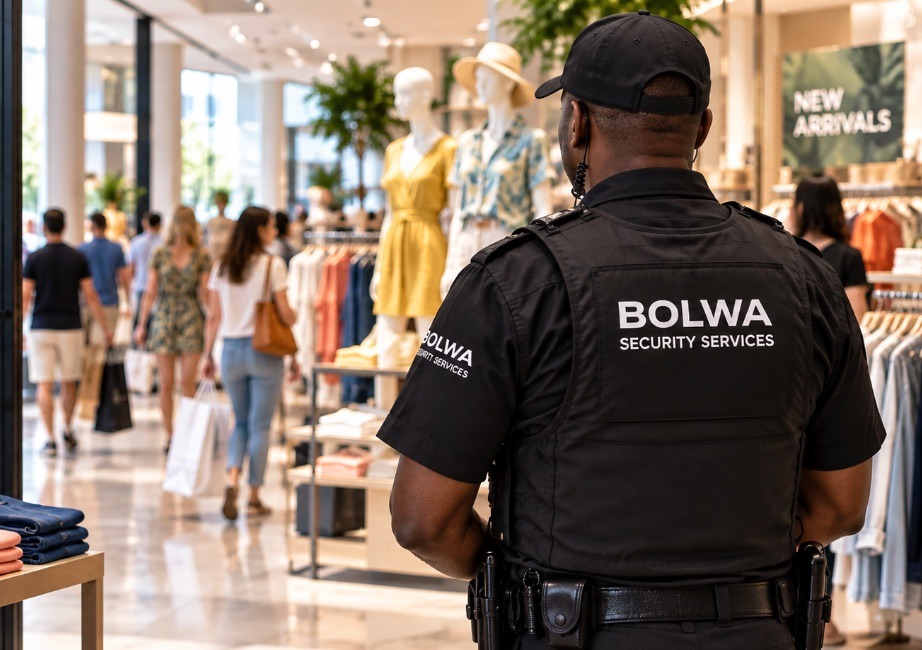
Black Friday falls on Friday 27 November 2026, two days after the 25th, which is payday for many workers. From there to the end of the January sales, most stores trade through their busiest, most cash-heavy and most stretched weeks of the year.
This guide is for store managers, franchise owners, regional, operations and centre managers in Gauteng who want festive season retail security planned, not improvised. It gives you a timeline, the extra posts worth booking and a printable checklist.
For the basics of retail guarding (entrance officers, loss prevention officers, post orders and comparing providers), start with our retail security services page. This guide covers what changes when trading peaks.
What the SAPS figures tell you, and what they don’t
SAPS does not publish crime figures for Black Friday or any single shopping day, so be wary of anyone who quotes them. It does publish quarterly data, and the October to December quarter covers the run-up to Christmas. For October to December 2025 (SAPS third quarter 2025/26 crime statistics):
- Shoplifting: 9,385 reported cases nationally, down 4.6% on the same quarter of 2024. Gauteng recorded 3,252, the highest province and 34.7% of the national total.
- Robbery at non-residential premises (business robbery): 2,942 nationally, down 22.5%. Gauteng recorded 1,035, down 15.7% but still the highest province.
- Local stations: Midrand, Johannesburg Central, Pretoria Central and Sandton were all among the seven stations with the most reported shoplifting in the country that quarter.
The latest quarter, April to June 2026, shows the same pattern: Gauteng again recorded the most shoplifting (3,504) and business robbery (920) (SAPS crime statistics).
Two cautions. These are reported cases only. And reported shoplifting did not climb in December: nationally it was 3,257 in October, 3,238 in November and 2,890 in December 2025. The case for planning is not a crime spike. It is volume: more people, stock, cash, deliveries and new staff, all at once.
The planning timeline
If Black Friday is less than six weeks away when you read this, combine the first two stages and do them this week.
Six weeks out (by Friday 16 October)
- Fix your peak dates in writing: Black Friday weekend (27 to 30 November), month-end paydays, late-night December trading, Christmas Eve, the Day of Goodwill and the January sales. Dates and hours are a booking; “Black Friday” is not.
- Walk the store with your security provider, looking at the entrance, queue space, tills, cash office, stockroom and receiving bay with peak volumes in mind.
- Read last year’s records. Occurrence books, incident reports and stock counts show where and when loss happened.
- Test what you have: CCTV recording and footage retention, alarms, tag gates and panic buttons.
- Book extra officers. Your provider needs time to confirm officers, check PSIRA registration and grade, and brief them. Ask for the same officers across your peak days.
- In a centre, ask centre management for their peak plan: opening times, queue rules, parking and emergency routes.
Two weeks out (by Friday 13 November)
- Write post orders for every extra post. Our post orders template is a starting point.
- Get the names of deployed officers and verify them with our five-point vetting checklist and PSIRA verification guide.
- Agree banking-run timings with your bank or cash-in-transit provider, and give suppliers delivery slots.
- Prepare the staff briefing, including temporary staff.
- Update your contact list: area manager, security supervisor, control room, centre security and your local SAPS station.
The week of Black Friday (23 to 27 November)
- Walk the site with the officers: doors, queue line, fire exits, cash office, receiving bay.
- Brief staff and officers together so everyone hears the same instructions.
- Count and secure high-value stock and decide how much goes on display.
- Finish deliveries early in the week, with nothing stacked in passages or emergency routes.
- Treat Wednesday 25 November, payday for many shoppers, as a dress rehearsal.
On the day
- Officers on post before the doors open, with the queue line already set out.
- A short huddle at opening and at every shift change.
- Officers stay on their posts. Don’t pull the door officer onto tills because it is busy.
- Regular cash drops, and incidents recorded as they happen.
- At closing, staff leave together, with an escort to their transport point if arranged.
After
Debrief within the week, adjust for December, then run the same cycle for the festive season and January sales.
Extra posts and when to book them
These are the peak-trading posts we typically discuss with retailers. Each can be added to a retail security contract for specific dates.
| Post | What it does | When it matters most |
|---|---|---|
| Second entrance officer | Deters and handles tag alarms while the first officer manages flow | Opening and the busiest afternoons |
| Queue marshal | Manages the outside queue and controlled entry | Black Friday opening, sale launches |
| Floor or loss prevention officer | Watches high-value zones and fitting rooms | Every peak day |
| Till-line officer | Visible at pay points, watches for distraction theft | Paydays, Black Friday, Christmas Eve |
| Receiving bay officer | Checks deliveries, controls back-of-house access | The weeks before Black Friday and December |
| Closing and staff escort | Covers lock-up, walks staff to transport | Late-night December trading |
| Banking-run escort | Escorts the staff member taking takings to the bank | After big trading days |
Book November, December and January dates at the same time, and ask who supervises the extra officers and what happens if one does not arrive. The right mix depends on your store, so discuss it at your site assessment.
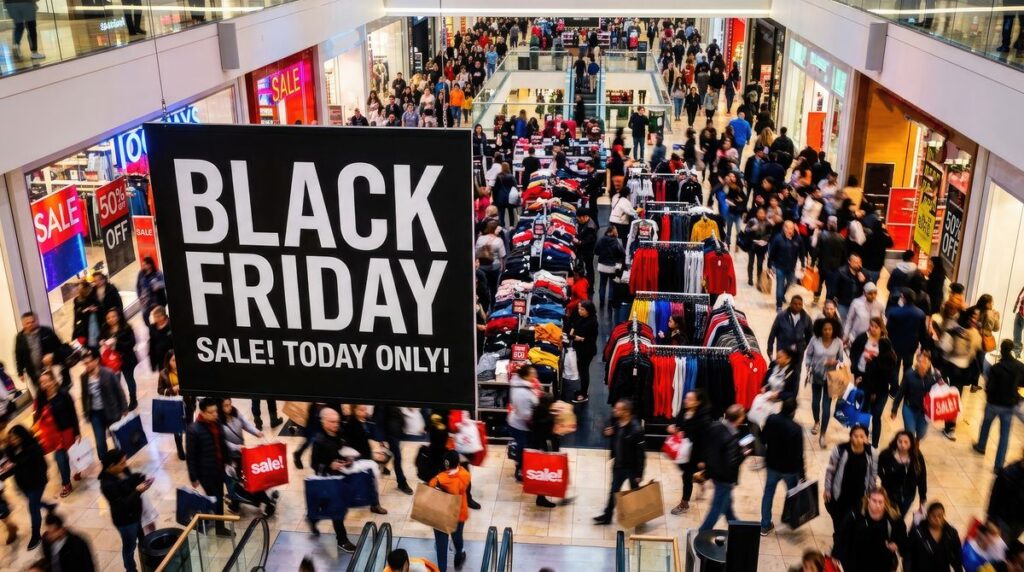
Queue and door management
- Agree an opening time, a maximum number of people inside and what happens when you reach it. In a centre, agree these with centre management.
- Once full, run one in, one out, with separate entry and exit if your layout allows.
- Keep the queue clear of fire exits, neighbouring stores and walkways. Never lock or block emergency exits.
- Apply your tag alarm policy consistently, even when it is busy.
- Ask officers to watch the queue itself. Crowds give pickpockets and distraction thieves cover.
Cash handling and banking-run risk
Peak days mean more cash in tills, more cash-ups and often predictable banking runs.
- Make more frequent cash drops so tills hold less.
- Vary banking times and routes where your bank or cash-in-transit arrangement allows.
- Never send one staff member alone with takings, and never count cash where customers can see it.
- Keep the cash office closed to everyone except named staff.
- Brief staff that in a robbery they comply and do not resist.
What Bolwa can and cannot do. A Bolwa officer can escort the staff member making a banking run, using Bolwa’s own vehicles and guards. Bolwa does not carry, hold or transport cash; larger cash movements stay with your cash-in-transit provider. A banking-run escort can be added for peak dates; discuss it at your site assessment.

Receiving bays during peak deliveries
Stock arrives in volume from late October, and much of what goes missing leaves through the back door.
- Schedule deliveries away from opening, peak hours and closing.
- Check every delivery against the delivery note before signing: count cartons and check seals.
- Keep drivers in a designated area. Nobody enters the stockroom unescorted.
- Move stock out of the bay promptly and lock the stockroom.
- Log every vehicle, driver and delivery time in the occurrence book.
- Search staff at the back-of-house exit consistently, including temporary staff and managers.
Staff briefings
Keep briefings short and repeat them at every shift change. Cover who makes security decisions on each shift, and that staff who suspect theft tell an officer rather than confronting anyone. Explain your apprehension policy and who may act on it; our shoplifting prevention guide covers the legal side. Add robbery response, emergency exits and your refund rules for the January returns rush. Temporary staff get the same rules and searches as everyone else, and an introduction to the officers on duty.
Incident recording
- Use the occurrence book and a standard incident report, agreed before the peak.
- Record the date, time and place, what happened, descriptions, witnesses, action taken, the SAPS case number if reported, and which CCTV camera covers it.
- Save CCTV footage promptly, before the system overwrites it.
- Record near misses and refused bag checks, not only thefts.
- Send a daily summary to the store manager and a weekly one to the area manager.
Working with centre management and SAPS
Centre management controls the common areas, parking and mall entrances. Share your plan, get theirs, and agree how your officers and centre security communicate. If you run the centre, our shopping centre security page covers the centre-wide brief.
SAPS: know your local station’s number and your sector contact, and introduce yourself before the peak. Join the local Community Policing Forum or business forum where one exists. Report every crime and keep the case numbers.
Bolwa’s 24/7 control centre coordinates with officers on site, SAPS and emergency services when something goes wrong. Bolwa is founded and led by a former SAPS Lieutenant Colonel with 23 years’ combined service in the SANDF and SAPS.
The debrief afterwards
Hold two debriefs: one in the week after Black Friday, while you can still change December’s plan, and one in mid-January. Ask what incidents happened and where, whether posts were in the right places, how queues, deliveries and banking runs went, whether temporary staff knew what to do, and what stock counts show against last year.
Turn the answers into updated post orders and a dated plan for next year. For longer-term fixes, use our stock-loss action plan template and retail loss prevention: 9 tactics that actually work.
Printable peak trading security checklist
Six weeks out
- ☐ Peak dates and hours confirmed in writing
- ☐ Store walk-through with your security provider
- ☐ Last year’s incidents and stock counts reviewed
- ☐ CCTV, alarms, tag gates and panic buttons tested
- ☐ Extra officers booked for every peak date
Two weeks out
- ☐ Post orders written for every extra post
- ☐ Officer names received and PSIRA registration checked
- ☐ Banking-run timings and delivery slots agreed
- ☐ Staff briefing prepared and contact list updated
Week of and on the day
- ☐ Joint staff and officer briefing held
- ☐ High-value stock counted and secured
- ☐ Queue line set out before opening
- ☐ Incidents recorded as they happen
After
- ☐ Debrief held and post orders updated
Frequently asked questions
When should I book extra security guards for Black Friday?
Ideally about six weeks before. Your provider needs time to confirm officers, check their PSIRA registration and brief them on your store. Book November, December and January dates together, with exact dates and hours. If you are already inside two weeks, call now and prioritise the posts that matter most.
How many extra guards do we need for peak trading?
It depends on your layout, footfall, trading hours, stock and whether you trade in a centre. A store with one entrance and a small stockroom needs a very different plan from a large store with a busy receiving bay. A site assessment, informed by last year’s incident records, is the honest way to work it out.
Can a security guard take our cash to the bank?
Bolwa officers can escort the staff member making a banking run, using Bolwa’s own vehicles and guards, but Bolwa does not carry, hold or transport cash. Your staff member keeps the takings, and larger cash movements stay with your cash-in-transit provider. A banking-run escort can be added for peak dates.
Does crime go up on Black Friday in South Africa?
SAPS does not publish figures for individual days, so there is no official Black Friday figure. SAPS data for October to December 2025 shows reported shoplifting and business robbery down on the year before, with Gauteng highest for both. The bigger planning issue is volume: more people, stock, cash and new staff at once.
Who manages the queue outside a store in a shopping centre?
Usually it is shared. Centre management controls walkways, entrances and parking, while the store is responsible for its own door and the people inside. Agree beforehand where your queue may form, how long it may be and how your officers will communicate with centre security. Never let a queue block fire exits.
What should we record when there is an incident?
Record the date, time and place, what happened, descriptions of those involved, witnesses, action taken, the SAPS case number if reported, and which CCTV camera covers it. Save the footage before it is overwritten. Good records support SAPS cases and give your debrief something solid to work from.
How do we get a peak trading security plan from Bolwa?
Call 086 1112 231, message us on WhatsApp or use our contact page. We arrange a site assessment at your store, look at your entrances, tills, stockroom, receiving bay and peak dates, then send a written quote promptly. Calling early gives you more choice of dates and officers.
Plan your peak trading cover now
Every store’s peak looks different, so we start with a site assessment. See how our retail security services work, call 086 1112 231, message us on WhatsApp, or book a site assessment through our contact page.
—
Planning peak trading cover for your store?
Bolwa Security Services is a PSIRA-registered guarding company (No. 2855895). Tell us about your store and trading dates, and we will arrange a site assessment and a written quote.
WhatsApp usRequest a site assessmentCall 086 1112 231