
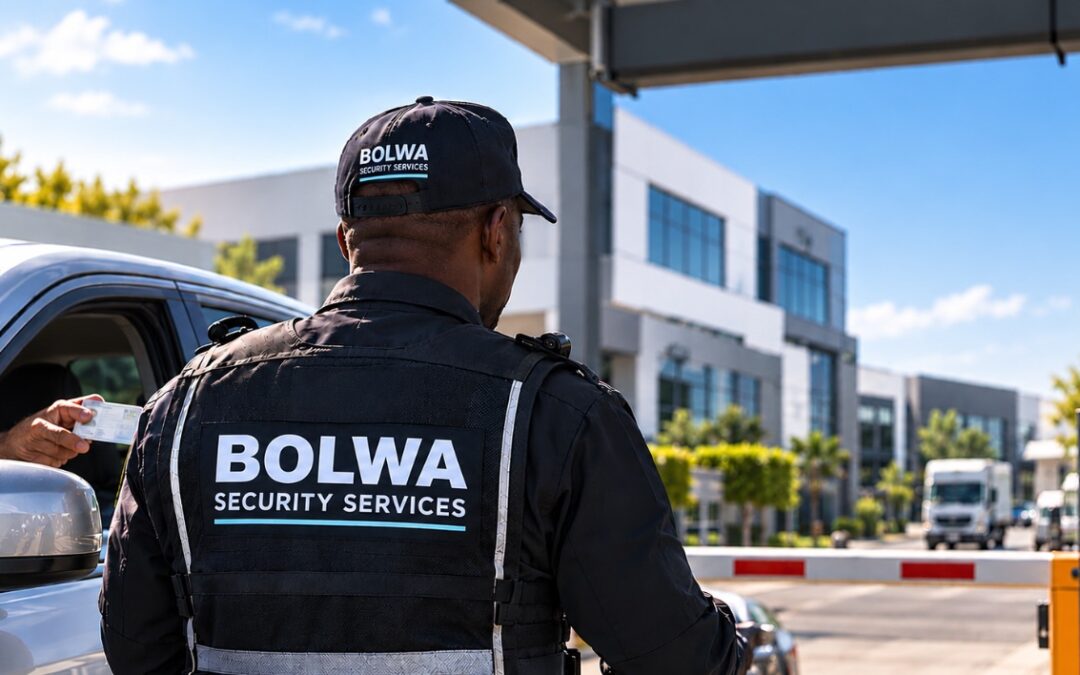
When people think about commercial property security, they often think about CCTV cameras, electric fencing, alarms and security guards.
All of these measures can play an important role, but there is another fundamental part of an effective security strategy that deserves just as much attention: access control.
Knowing who is entering your premises, why they are there and when they leave can make a significant difference to the overall security of a commercial property.
For South African businesses, where offices, warehouses, industrial sites, retail properties and business parks can experience a constant flow of employees, visitors, contractors and delivery vehicles, properly managed access control is an essential first line of defence.
What is access control?
At its simplest, access control is about managing who is allowed onto a property and which areas they are permitted to enter.
However, effective access control involves much more than opening and closing a gate.
It can include checking identification, confirming visitors, maintaining visitor registers, issuing access cards or visitor passes, checking vehicles, monitoring deliveries and ensuring that people do not enter restricted areas without authorisation.
The objective is straightforward: authorised people should be able to access the areas they need, while unauthorised people should be prevented from gaining access.
This sounds simple, but maintaining effective access control requires consistency, attention to detail and trained personnel.
Entrances are a critical security point
The entrance to a commercial property is one of the most important areas to manage.
Once someone has entered a premises, it can become considerably more difficult to determine where they are going or what they are doing. A properly managed entrance therefore provides an opportunity to establish who is coming onto the property before they gain access.
Professional security officers can assist by checking identification, confirming authorisation and following the property’s established entry procedures.
Employees should also be familiar with these procedures and understand why they matter.
For example, allowing someone to enter simply because they are wearing a uniform or appear to be familiar with the premises can create an unnecessary security risk.
Consistent procedures help reduce reliance on assumptions.
Visitor registers provide valuable information
Visitors are an everyday part of business.
Clients arrive for meetings. Contractors come to perform maintenance. Suppliers deliver goods. Job candidates attend interviews. Service providers may need access to specific areas.
Keeping an accurate visitor register helps businesses maintain visibility over who is on the premises.
Depending on the property’s procedures, visitors may be asked to provide their name, company details, contact information, purpose of their visit and the person they are meeting. They may also receive a visitor pass that makes it clear they are not an employee.
This information can be particularly useful during an incident or emergency because management and security personnel have a clearer record of who should be on the property.
A visitor register should therefore be viewed as part of the wider security system rather than simply another administrative task.
Vehicle checks can help protect commercial sites
For businesses with parking facilities, warehouses, loading areas or large industrial properties, vehicles can present another access control challenge.
Security personnel may need to verify vehicles entering and leaving the premises, check delivery information and confirm that vehicles have legitimate reasons for being on site.
Vehicle checks can also help identify unusual activity.
For example, an unfamiliar vehicle repeatedly entering an area where it has no obvious reason to be present may warrant additional attention.
The exact procedures will depend on the business and the nature of the property, but having clear processes in place can help reduce opportunities for unauthorised access and theft.
Identification procedures create accountability
Identification is another important component of access control.
Businesses may use employee identification cards, access cards, biometric systems or other methods to confirm that individuals are authorised to enter particular areas.
The method used will depend on the size and requirements of the business.
The important principle is that access should be based on authorisation rather than assumption.
If an employee loses an access card, for example, there should be a process for reporting it and preventing inappropriate use. Similarly, when employees leave the organisation, access rights should be removed promptly.
These simple administrative steps can help prevent unnecessary security gaps.
Access control is also about restricted areas
Not everyone who is authorised to enter a property should necessarily have access to every part of it.
A commercial premises may contain offices, server rooms, storerooms, financial departments, archives, production areas or other restricted locations.
Access control can help businesses manage these different levels of access.
Security personnel can assist by monitoring movement into restricted areas and ensuring that people follow the relevant procedures.
This is particularly important for businesses that handle valuable stock, confidential information, sensitive equipment or other assets that require additional protection.
Security guards add the human element
Technology can make access control more efficient.
Electronic gates, card systems, biometric technology, CCTV and other tools can help businesses manage and monitor access. However, technology works particularly well when supported by trained security personnel.
A security officer can assess situations that do not fit neatly into an automated system.
They can speak to a visitor, verify information, notice suspicious behaviour and escalate concerns when necessary.
For example, an access card may confirm that someone has permission to enter a building, but a security officer may notice that the person is attempting to allow several unauthorised individuals to enter behind them.
This is where human awareness becomes an important complement to technology.
Access control supports emergency management
Good access control is not only about preventing crime.
It can also support businesses during emergencies.
Knowing who is on the premises can help management and emergency personnel account for employees, visitors and contractors during an evacuation or other emergency situation.
Security officers can also assist by controlling entrances and preventing unnecessary people from entering an affected area.
Having clear access procedures before an emergency occurs makes it easier to respond when something unexpected happens.
Building a stronger security culture
Effective access control ultimately depends on everyone understanding their role.
Employees need to follow established procedures. Visitors need to comply with registration requirements. Contractors need to use the correct access points. Security personnel need to apply procedures consistently. Management needs to address weaknesses when they are identified.
When everyone understands that access control exists to protect people and property rather than simply to inconvenience them, compliance becomes much easier.
Small procedures can make a big difference
Access control may not be the most glamorous part of commercial security, but it is one of the most important.
A properly managed entrance, accurate visitor register, appropriate identification process and effective vehicle checks can all contribute to reducing vulnerabilities.
Combined with professional security guarding, CCTV, alarms and other security measures, access control becomes part of a layered approach to protecting commercial property.
For South African businesses, security starts at the point where people and vehicles enter the premises.
Knowing who is coming in, why they are there and where they are authorised to go gives businesses greater control over their environment.
And sometimes, effective security begins with something as simple as asking the right question at the gate: “How can we assist you today?”
As shared on LinkedIn
🔐 SECURITY STARTS AT THE GATE!
Who is entering your business premises? Why are they there? And are they authorised to be there?
When it comes to protecting commercial properties, CCTV cameras, alarms and electric fencing are important, but effective access control is just as essential.
From verifying visitors and monitoring deliveries to managing vehicle access and protecting restricted areas, the right procedures can make a significant difference in preventing unauthorised access, theft and security breaches.
At Bolwa Security Services, we understand that effective security is about more than having someone stationed at the entrance. It requires trained security personnel, consistent procedures, attention to detail and the ability to identify potential risks before they become serious problems.
Our latest blog explores the importance of access control in protecting South African commercial properties and why combining professional security guarding with effective access management creates a stronger first line of defence.
📖 Read our latest blog: The Importance of Access Control in Protecting South African Commercial Properties.
🛡️ Protect your people. Secure your premises. Safeguard your business.
Looking for professional security solutions for your commercial property? Get in touch with Bolwa Security Services.
📞 086 1112 231 📧 info@bolwasecurityservices.co.za
#BolwaSecurityServices #AccessControl #CommercialSecurity #SecurityGuarding #BusinessSecurity #PropertyProtection #SecuritySolutions #SouthAfrica