
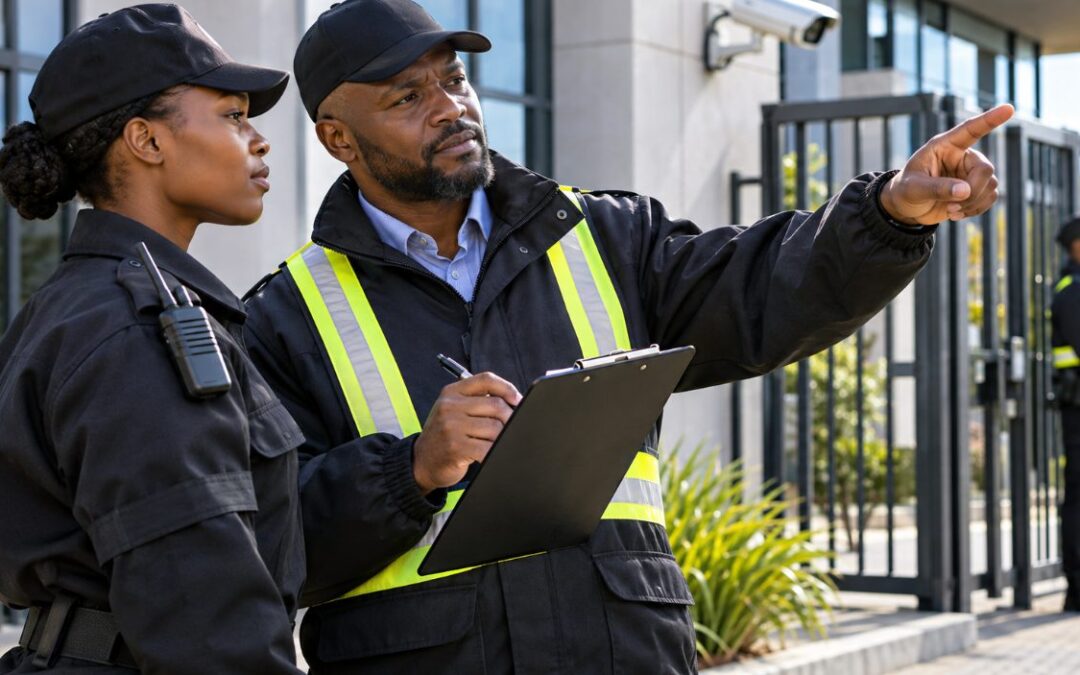
When a business appoints a professional security company, the security officers on site are the most visible part of the service. They are the people managing access, conducting patrols, monitoring the premises and interacting with employees, visitors and contractors.
But behind a reliable guarding operation, there is another important role that is sometimes overlooked: the security supervisor.
A strong security service is not simply about putting guards on a site and leaving them to get on with the job. Effective supervision helps ensure that officers understand their responsibilities, follow established procedures and maintain the standards expected by both the security company and the client.
For South African businesses, consistent supervision can make a significant difference to the reliability and effectiveness of a security operation.
What does a security supervisor do?
A security supervisor is responsible for overseeing security personnel and helping ensure that the agreed service is being delivered properly.
Their responsibilities can vary depending on the size and nature of the site, but may include conducting inspections, checking attendance, monitoring performance, communicating with guards, addressing operational concerns and reporting issues to management.
They can also act as an important link between the security officers and the client.
If a problem occurs on site, the supervisor may be responsible for investigating the situation, communicating with the relevant people and ensuring that appropriate corrective action is taken.
This provides an additional layer of accountability that is difficult to achieve when guards are working without regular oversight.
Site inspections help maintain standards
Regular site inspections are an important part of effective security supervision.
A supervisor can visit the premises to check whether security officers are carrying out their responsibilities properly and whether site procedures are being followed.
This may include checking access control points, observing patrols, reviewing security registers and ensuring that guards are appropriately presented and alert.
Inspections can also identify environmental issues that could affect security.
For example, a supervisor may notice poor lighting, damaged fencing, an unsecured entrance or another vulnerability that needs to be brought to the client’s attention.
These observations can help businesses address problems before they develop into more serious security concerns.
Consistency matters
Security is not something that should work well one day and poorly the next.
Businesses need confidence that the agreed security procedures are being followed consistently, regardless of which officer happens to be working a particular shift.
Supervision helps establish this consistency.
If officers know that their performance is being monitored, they are more likely to remain attentive and follow established procedures. Supervisors can also identify areas where additional training or clarification may be required.
Consistency is particularly important for access control.
If one officer carefully checks every visitor while another allows people through without following the required process, the security system immediately becomes weaker.
Clear standards combined with regular supervision help reduce these inconsistencies.
Communication keeps everyone informed
Security requirements can change.
A business may introduce new access procedures, change operating hours, move an entrance, host an event or become aware of a particular security concern.
These changes need to reach the security team.
Supervisors can play an important role in communicating information to security officers and making sure that everyone understands what is expected.
Communication also needs to work in the other direction.
Security officers are often the people who notice unusual activity, operational problems or emerging vulnerabilities first. Supervisors can ensure that these observations are communicated to the appropriate management personnel.
Good communication therefore creates a two-way flow of information between the security team and the client.
Accountability creates responsibility
Security officers have important responsibilities, and there needs to be accountability when those responsibilities are not being met.
This does not mean creating an environment where officers are constantly looking over their shoulders. Instead, it means establishing clear expectations and having appropriate processes for addressing concerns.
Supervisors can monitor attendance, punctuality, appearance, alertness, compliance with procedures and general performance.
If an issue is identified, it can be addressed rather than simply overlooked.
Accountability also protects good security officers.
When standards are clearly defined and consistently applied, officers who take their responsibilities seriously know what is expected of them and can receive appropriate support when challenges arise.
Supervisors can identify training needs
Not every security challenge is caused by poor performance.
Sometimes an officer may simply need additional training or clarification.
A supervisor who regularly interacts with the security team may identify areas where officers need more support.
Perhaps the team needs additional guidance on visitor management. Maybe an access control procedure has changed. Perhaps incident reporting needs to be improved.
Identifying these needs allows training to be targeted and practical.
Ongoing development is important because security environments can change over time.
Incident management benefits from supervision
When a security incident occurs, supervisors can provide valuable support.
They may assist with gathering information, communicating with the client, reviewing reports and ensuring that the appropriate procedures have been followed.
After an incident, supervision can also help identify what could be improved.
Was the response appropriate? Were communication channels effective? Was the incident reported correctly? Are additional measures needed to reduce the likelihood of a similar event happening again?
These questions turn an incident into an opportunity to strengthen future security.
Technology does not replace supervision
Modern security technology can provide businesses with valuable tools.
CCTV, electronic access control, alarm systems and digital reporting can improve visibility and efficiency. However, technology still needs people to manage it effectively.
Supervisors can help ensure that security personnel understand how to use available systems and that important information is acted upon.
Technology can show what is happening. Supervision helps ensure that the people responsible for responding to that information are doing their jobs properly.
Strong supervision builds client confidence
For a business owner or facilities manager, one of the most valuable things a security company can provide is confidence.
You want to know that the security operation is being managed even when you are not physically on site.
Regular inspections, clear communication, performance monitoring and appropriate reporting can provide that reassurance.
It also means that concerns can be addressed before they become ongoing problems.
A good supervisor does not simply look for mistakes. They help create a culture where security officers understand their responsibilities and have the support they need to perform them effectively.
Reliable security requires leadership
Professional security guarding is a team effort.
Security officers provide the physical presence on the premises, while supervisors provide oversight, guidance and accountability. Management provides direction and communicates the needs of the business.
When these elements work together, the result is a more consistent security operation.
For South African businesses, this is particularly important because security requirements can vary considerably from one property to another. Effective supervision ensures that guarding services remain aligned with the specific needs of the site.
Ultimately, the quality of a security service is not determined only by the person standing at the gate.
It is also influenced by what happens behind the scenes.
Regular site inspections, strong communication, ongoing support and clear accountability help maintain professional standards and ensure that security personnel remain focused on their responsibilities.
A reliable security operation needs reliable supervision.
And when the people behind the security team are actively supporting, monitoring and managing the service, businesses can have greater confidence that their security is being treated as an ongoing responsibility rather than simply a job to be filled.
As shared on LinkedIn
🛡️ Strong Security Starts with Strong Supervision!
A reliable security service involves more than simply having guards stationed at your premises. Behind every professional security team is effective supervision, clear communication and consistent accountability.
👮♂️ Security supervisors play a vital role in maintaining guarding standards through regular site inspections, performance monitoring, ongoing training and incident management.
From ensuring access control procedures are followed to identifying potential security risks, effective supervision helps businesses maintain a safer, more secure environment.
✅ Consistent guarding standards
✅ Regular site inspections
✅ Improved communication and accountability
✅ Proactive risk identification
✅ Professional security personnel
At Bolwa Security Services, we understand that reliable security requires teamwork, leadership and a commitment to maintaining professional standards.
📖 Read our latest blog: The Role of Security Supervisors in Maintaining Consistent Guarding Standards.
🔐 Your Safety, Our Priority!
📞 Contact Bolwa Security Services to discuss your business’s security requirements.
#BolwaSecurityServices #SecuritySupervision #ProfessionalSecurity #SecurityGuards #GuardingServices #SecurityManagement #BusinessSecurity #SouthAfrica #SecurityStandards