
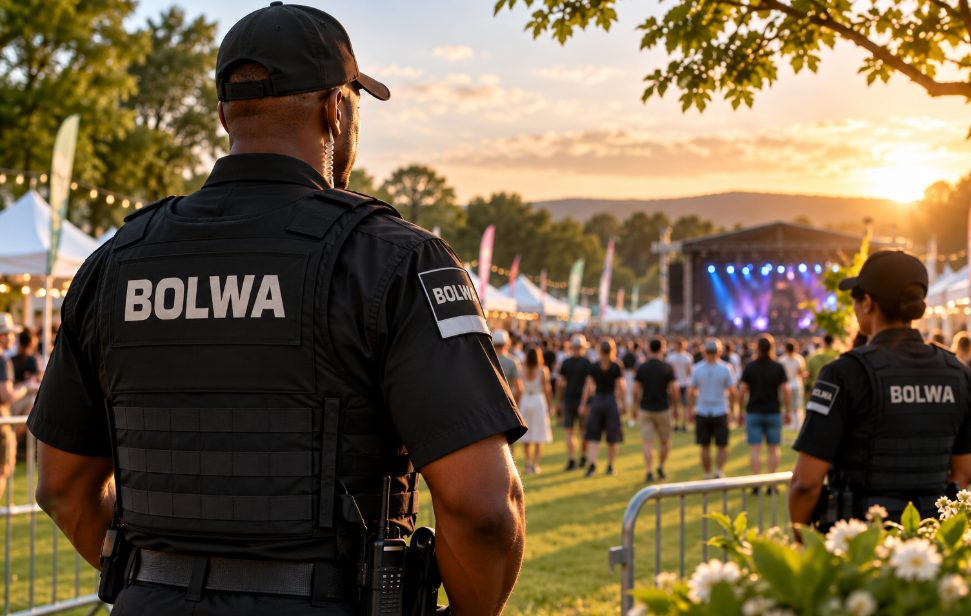
Spring brings a welcome change of pace. Warmer temperatures, longer days and more pleasant weather encourage people to get outdoors, making the season particularly popular for community festivals, markets, sporting events, corporate gatherings, school functions and family-friendly celebrations.
For event organisers, however, an outdoor setting brings a different set of security considerations. Unlike a controlled indoor venue, an open field, park or public space can have multiple access points, large areas that are difficult to monitor and constantly changing patterns of movement.
As attendance grows and visitors move between different attractions, food stalls, entertainment areas and facilities, maintaining safe and orderly crowd flow becomes increasingly important. Professional event security plays a crucial role in helping organisers manage these challenges while ensuring that guests can enjoy the event in a safe, relaxed and welcoming environment.
Why Outdoor Spring Events Require Special Security Measures
The Challenges of Open Spaces
One of the biggest challenges associated with outdoor events is the sheer size and openness of the venue.
An event may cover a large field or park, with several entrances, exits, parking areas, activity zones and informal pathways between them. Some areas may be fenced, while others could remain relatively open, making it more difficult to control exactly where people enter and leave.
This creates several potential security vulnerabilities. Unauthorised individuals may be able to enter unnoticed, attendees may wander into restricted areas, and security personnel may have difficulty maintaining visibility across the entire site.
Effective event security therefore starts well before the first guest arrives. Organisers and security teams need to understand the layout of the venue, identify potential blind spots and determine where personnel should be positioned to provide the best possible coverage.
Rather than simply placing guards at the main entrance, a well-planned security operation considers the entire event footprint.
Larger Crowds Bring Greater Complexity
Good spring weather can be a major attraction for an event, but it can also mean significantly higher attendance.
As more people arrive, areas that were relatively quiet at the beginning of the day can quickly become congested. Entrances, food and beverage areas, popular attractions, toilets and entertainment spaces can all become bottlenecks.
Crowding is not necessarily dangerous in itself, but poorly managed crowds can increase the likelihood of slips, trips, collisions, disputes and, in more serious circumstances, crowd surges or overcrowding.
This is why crowd management should not be treated as something that only becomes necessary once a problem develops. Security personnel should continuously observe how people are moving around the venue and identify potential congestion before it becomes a safety concern.
Preparing for Seasonal and Environmental Risks
Spring weather may be pleasant, but it is not always predictable.
Outdoor events can be affected by sudden rain, strong winds, storms and rapidly changing ground conditions. Heavy rain can turn grass and pathways into slippery or muddy surfaces, while strong winds can create risks around temporary structures, marquees, signage and other equipment.
There are also less obvious challenges to consider. Large family-oriented events, for example, can increase the likelihood of children becoming separated from parents or guardians. Visitors who are unfamiliar with the venue may also become disorientated, particularly when an event covers a large area.
A comprehensive security plan takes these possibilities into account rather than focusing solely on conventional security threats.
Strategies for Managing Open Spaces and Crowd Flow
Start with Careful Planning and Venue Layout
Effective crowd management begins with the layout of the event.
Entry and exit points should be clearly identified, while different areas of the venue should be arranged in a way that encourages natural and predictable movement. Activity areas, food stalls, entertainment spaces, toilets, parking and emergency access routes should be positioned with crowd behaviour in mind.
Clear signage can make a surprisingly significant difference. When attendees know where they are going, there is less unnecessary wandering, fewer interruptions to the flow of foot traffic and less pressure placed on security personnel.
Where appropriate, barriers can also be used to create defined routes and prevent visitors from entering restricted or potentially hazardous areas.
The objective is not to make an event feel controlled or restrictive. Good planning should make movement feel natural to the attendee while quietly providing the structure necessary to keep everyone safe.
Maintain a Visible but Approachable Security Presence
Security personnel are most effective when they are visible and strategically positioned.
At an outdoor event, guards may need to be stationed at entrances, exits, high-traffic areas, parking zones and particularly busy attractions. Mobile patrols can then provide additional coverage across larger areas and allow security teams to respond quickly when circumstances change.
Visibility also has an important preventative function. When attendees can see that trained security personnel are present, potential troublemakers may be discouraged from causing problems in the first place.
At the same time, security should not feel unnecessarily intimidating. Guards are often among the first people attendees approach when they need directions, assistance or help with a concern. A professional, approachable security presence therefore contributes to both safety and the overall attendee experience.
Monitor Crowd Flow Throughout the Event
Crowd movement is rarely static.
An area may be relatively quiet for most of the afternoon before suddenly becoming crowded when a particular performance starts or a popular attraction opens. Similarly, food and beverage areas may experience significant spikes during meal times.
Security teams need to monitor these changes continuously.
Identifying bottlenecks early allows organisers to respond before congestion becomes problematic. Additional personnel can be moved into busy areas, queues can be redirected and barriers or signage can be adjusted where necessary.
This dynamic approach is far more effective than simply assigning a fixed number of guards to predetermined positions and leaving them there regardless of how the crowd behaves.
Be Prepared for Emergencies
Even a well-organised event can experience unexpected incidents.
Someone may suffer a medical emergency, a child may become separated from their family, severe weather may require people to move indoors or an attendee may become disruptive. The difference between a minor incident and a major disruption can often come down to how quickly and professionally the situation is handled.
Security personnel should understand the event’s emergency procedures, including evacuation routes, emergency access points and designated assembly areas.
They should also know who is responsible for making decisions and how to communicate with event management, emergency medical personnel, police, fire services and other relevant authorities.
Clear responsibilities and communication channels help prevent confusion when every second matters.
Use Technology to Strengthen Security Operations
Technology can provide valuable support to a trained security team, particularly at larger outdoor events.
CCTV can help monitor areas that are difficult to observe directly, while two-way radios allow security personnel to communicate quickly across a large site. Mobile communication tools can also help teams coordinate responses without requiring personnel to leave their assigned positions.
Digital incident reporting systems provide another useful layer of support. Recording incidents as they happen creates a clearer operational picture and can help organisers identify recurring problems or areas that may require additional attention during future events.
Technology, however, should complement rather than replace professional security personnel. Cameras can identify an incident, but trained personnel are still required to assess the situation and respond appropriately.
The Benefits of Professional Security at Outdoor Spring Events
Investing in professional event security provides benefits that extend well beyond simply preventing unwanted incidents.
Enhanced safety is perhaps the most obvious advantage. By identifying potential hazards, monitoring crowds and responding quickly to incidents, trained security personnel help reduce the likelihood and impact of accidents and other emergencies.
Effective security also contributes to more efficient crowd management. When entrances, exits, queues and busy areas are properly managed, visitors can move around the venue more comfortably and safely.
Another important benefit is rapid incident response. Problems can escalate quickly in a crowded environment, but having trained personnel already positioned throughout the venue means assistance can be provided without unnecessary delay.
There is also a significant impact on the attendee experience. People are more likely to relax and enjoy an event when they feel that their safety has been considered. Professional security personnel can provide reassurance while also assisting with directions, lost children and general enquiries.
Finally, appropriate security arrangements can help organisers meet their operational and safety responsibilities while protecting the reputation of the event and the organisation behind it.
Best Practices for Outdoor Event Security
Every outdoor event is different, but several principles should form the foundation of an effective security strategy.
A thorough risk assessment should be completed before the event, taking into consideration the venue, terrain, expected attendance, weather conditions, activities and potential hazards.
Organisers should also carefully plan access and exit routes, ensuring that attendees can enter and leave without creating unnecessary congestion and that emergency services can access the site when required.
Security staffing should be based on the actual requirements of the event, rather than simply using a standard number of guards. Large or particularly busy areas may require additional coverage, while mobile patrols can help provide flexibility across the wider venue.
Strong communication between organisers, security teams and emergency services is equally important. Everyone involved should understand their responsibilities and know how concerns or incidents will be escalated.
Finally, barriers, signage and carefully designed pedestrian routes should be used to guide attendees naturally through the venue and help prevent overcrowding in critical areas.
Outdoor spring events create wonderful opportunities for people to come together, enjoy the warmer weather and experience something memorable. But the very features that make outdoor events appealing, open spaces, large crowds and multiple activities, can also create unique security and crowd-management challenges.
The key is preparation.
By combining careful venue planning, trained security personnel, effective crowd-flow management, emergency preparedness and appropriate technology, organisers can create an environment where safety is built into the event from the outset.
Professional event security is not simply about reacting when something goes wrong. It is about anticipating potential problems, maintaining visibility, guiding people safely and responding quickly when circumstances change.
When these elements work together, organisers can focus on delivering a successful event while attendees can simply enjoy the experience, knowing that their safety is in capable hands.
A well-secured event is one where security works quietly in the background, allowing everyone else to enjoy the occasion.
As shared on LinkedIn
🌸 Spring is here, and outdoor events are getting busier.
From community festivals and markets to corporate functions and sporting events, spring creates the perfect opportunity to bring people together. But when large crowds gather in open spaces, keeping everyone safe requires more than simply having security at the entrance.
Multiple access points, changing crowd patterns, congested walkways, unpredictable weather and the possibility of emergencies all need to be considered before the first attendee arrives.
Effective event security is about planning ahead, managing crowd flow, maintaining visibility and responding quickly when circumstances change.
At Bolwa Security Services, professional security personnel can help event organisers create a safer, more organised environment, allowing guests to enjoy the occasion while knowing that their safety is being taken seriously.
📖 Read our latest blog:Outdoor Spring Events: Managing Open Spaces and Crowd Flow
Discover the key security considerations for creating safer, better-managed outdoor events this spring.
#BolwaSecurityServices #EventSecurity #SpringEvents #CrowdManagement #EventSafety #SecurityServices #OutdoorEvents #SecuritySolutions #EventManagement #SouthAfrica