
Warehouse Security Services for Industrial Sites, Factories and Distribution Centres
Most losses at a warehouse or factory do not start with someone cutting the fence at 2am. They start at the gate, the dispatch bay and the paperwork: a load that leaves with one pallet more than the delivery note, a contractor's bakkie that is never searched on the way out, a seal number nobody checked. Good warehouse security services are built around the flow of goods, people and vehicles through your site, not just around the perimeter.
Request a site assessmentCall 086 1112 231Bolwa Security Services provides PSIRA-registered manned guarding for warehouses, distribution centres, factories and manufacturing plants, industrial yards and logistics depots, with Gauteng as our core area and local pages for KwaZulu-Natal and Mpumalanga. This page explains what effective industrial guarding looks like, what to put in your post orders, and how to compare quotes fairly.
Why industrial and logistics sites need a different guarding model
A warehouse is not an office block with a bigger floor. The risk sits in movement: trucks arriving and leaving, stock being received and dispatched, shift changes, contractors, and yards full of equipment, cable and fuel. A guard who only watches the front gate misses most of that.
The South African Police Service's figures for April to June 2026 show why business owners stay cautious. Nationally, SAPS recorded 10,721 burglaries at non-residential premises (down 1.5%, with 2,330 in Gauteng), 2,733 robberies at non-residential premises (down 11.8%, with Gauteng the highest province at 920) and 327 truck hijackings (down 21.0%, with 219 of those in Gauteng) (SAPS crime statistics, first quarter 2026/27). The trend is down, but the numbers remain high, and Gauteng carries a large share of truck and business-premises crime.
Industrial sites tend to share a handful of weak points:
- Gates that log but don't verify. Registers get filled in, but loads, seals and documents are not checked against each other.
- Busy receiving and dispatch bays where goods can be over-loaded, under-received or short-shipped during peak times.
- Contractors and casual labour moving between areas with little control over what they bring in or take out.
- Large yards and long perimeters holding copper cable, scrap metal, diesel, pallets and equipment that are easy to move and easy to sell.
- Night shifts and weekends when fewer managers are on site and routines slip.
- Insider involvement, where losses depend on someone inside knowing the gaps.
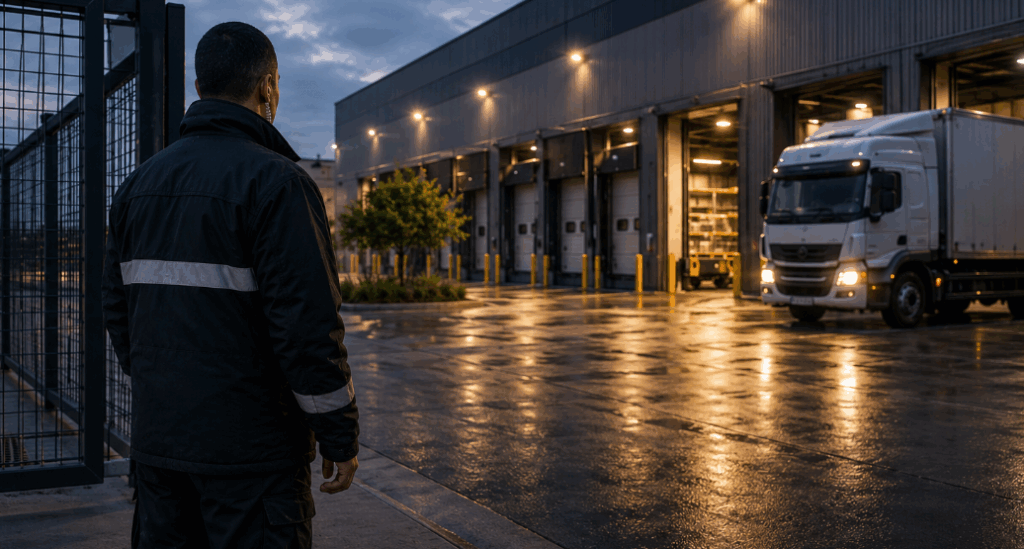
What good warehouse and factory guarding covers
Gate and vehicle control
The gate is the single most important post on most industrial sites. Officers should record every vehicle in and out (registration, driver, company, time, purpose) and apply the checks agreed in the post orders. That usually means verifying the driver's identity against the booking or collection instruction, checking the vehicle is expected, and inspecting cabs and load areas on exit. Where you have a weighbridge, the post orders should say what happens when the recorded weight and the paperwork don't agree: who is called, and whether the vehicle is held until it is resolved.
Driver and load checks
Driver and load checks only work if officers know what "correct" looks like. Give them a clear standard: the documents a driver must present, what is compared (delivery note, invoice, gate pass, collection number), and what the officer does if something doesn't match. Officers should not be expected to count stock, but they can check pallet or unit counts against the paperwork when the procedure calls for it, and escalate differences rather than wave them through.
Receiving and dispatch bays
Loading bays are where goods change hands, so they need a visible security presence during active hours. A bay officer can control who is on the dock, stop drivers wandering into the warehouse, watch for goods placed outside the loading line, and make sure the bay is closed and secured after the last vehicle leaves.
Seal and paperwork verification
For containerised or sealed loads, officers can record seal numbers on arrival and departure and compare them with the documents. A broken, missing or mismatched seal should trigger a defined escalation, not a note in the book that nobody reads until the claim is disputed.
Contractor and visitor access
Contractors are a common gap on industrial sites. Access control should confirm that each contractor is expected, record who they are and where they are going, issue and recover passes, and check tools and materials in and out. Our officers work with the access control and visitor management systems you already have in place, rather than asking you to change them.
Perimeter and yard patrols
Patrols should be planned around the risk, not just the fence. That includes checking fence lines and gates, stacked materials, parked trailers, fuel points, cable and scrap storage areas, and the lighting. Patrols are only useful if findings are recorded and acted on: a hole in the fence noted on Monday should not still be open on Friday.
Night-shift and weekend cover
Night work brings different risks and different costs. Fewer staff are on site, supervision is harder, and routines drift. Our 15-point night-shift warehouse checklist covers the essentials, and our guide to night-shift premiums in Gauteng explains why after-hours posts are priced differently.
Insider theft controls
Guarding cannot fix an insider problem on its own, but it can make theft harder. Useful controls include searching procedures at staff exits (applied consistently to everyone the policy covers), control of staff vehicles parked inside the perimeter, rotation of officers between posts, clear rules on who may authorise goods to leave the site, and reporting that shows patterns, such as the same collection being queried repeatedly.
Stock, fuel, copper and cable theft
Industrial sites often hold items with a ready resale market: copper cable, scrap metal, diesel, batteries, tools and finished goods. Identify these areas in your site brief, set patrol points around them, and agree what officers should check (for example, fuel bowser locks, cable drums and storage cages) on each round.
Escort of high-value loads
Where a high-value load needs protection on the road, Bolwa can provide convoy escort using our own vehicles and guards. To be clear: we escort; we do not transport goods. The carrier or your own fleet moves the load, and the escort team accompanies it.
Occurrence books and reporting
The occurrence book (OB) is the running record of what happened on each shift: patrols, vehicle movements, incidents, handovers and anything unusual. Clear, legible OB entries help with insurance claims, disciplinary processes and SAPS cases. Ask how incidents are reported to you, who signs off the OB, and how exceptions are escalated between shifts. Bolwa's 24/7 control centre supports the site, and in an emergency the control room coordinates with the guards, SAPS and emergency services.
What to put in your post orders
Post orders are the written instructions for each post. If they are vague, officers will fill the gaps with guesswork. For an industrial site, make sure they cover:
- Site overview: operating hours, shift pattern, key contacts and who can authorise exceptions.
- Gate procedure: vehicle and driver checks, required documents, weighbridge and seal checks, and what to do when something doesn't match.
- Bay rules: who may be on the dock, when bays open and close, and how officers support receiving and dispatch.
- Contractor and visitor control: pre-approval, passes, escort requirements and tool checks.
- Search procedure: who is searched, where, how, and by whom, in line with your company policy.
- Patrol routes: routes and checkpoints, including yards, fuel points and cable or scrap storage.
- Escalation: who to call, in what order, and when to involve SAPS or emergency services.
- Reporting: OB standards, incident reports and shift handover.
Our post-orders template for South African sites gives a full structure you can adapt.
How to compare warehouse security quotes
Quotes for industrial guarding can look similar on paper and be very different on site. Compare them on the same basis:
- Same scope. Check that each quote covers the same posts, hours, number of officers, and day, night and weekend shifts. A lower price often means fewer posts or less relief cover.
- Grading. Ask what PSIRA grade each officer will hold and whether that suits the post (for example, a gate or supervisory role).
- Supervision. Ask how supervision works and who you deal with when something goes wrong.
- Relief and absence cover. Ask how posts are filled when an officer is sick or on leave.
- Reporting. Ask to see an example of an OB entry or incident report.
- Service level agreement. Check what the provider commits to measuring, and how issues are reviewed.
- Compliance. Confirm the company's PSIRA registration yourself (see below), and ask whether officers' pay and conditions follow the sectoral determination.
Our guide on how to compare security company quotes in South Africa goes into more detail, including common red flags.
Verify before you appoint
On 4 September 2026, PSIRA issued a notice after finding suspected fraudulent or altered Letters of Good Standing submitted in tenders. PSIRA advised buyers to verify every Letter of Good Standing directly with PSIRA, confirm the business is registered, verify its directors, make sure every officer deployed is registered and appropriately graded, and not to appoint providers who can't be independently verified (PSIRA notice, 4 September 2026). For procurement teams running industrial tenders, that check should be standard. Our PSIRA verification guide walks you through it.
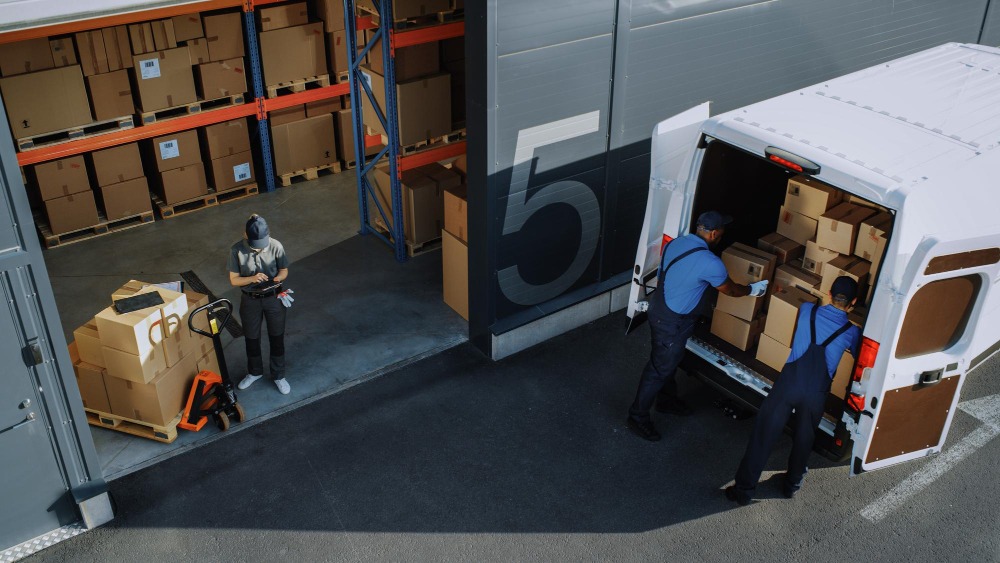
Industrial and warehouse security by area
Each local page covers the specifics of that area. Start with the one closest to your site:
Gauteng
- Warehouse and industrial security in Germiston (Germiston, Wadeville, Elandsfontein and surrounding industrial areas)
- Mining and industrial security in Roodepoort (West Rand)
KwaZulu-Natal
- Warehouse and industrial security guards in Pinetown and New Germany
- Port and industrial security in Durban South Basin
- Industrial and port security in Richards Bay and Empangeni
Mpumalanga
Running a mine rather than a factory or warehouse? Mining sites have their own requirements, covered on our mining security in South Africa page.
How Bolwa works with industrial clients
Every site is different, so we start with a site assessment rather than a standard package. We look at your gates, bays, yards, shift pattern and the areas where you have had losses, then propose posts and procedures to match. Service is measured against an agreed service level agreement, and supervisors visit sites to check that post orders are being followed.
Our core service is PSIRA-registered manned guarding, supported by access control and visitor management, patrols, supervision, occurrence books and incident reporting, and CCTV and alarm monitoring with escalation. Armed response can be added to your guarding contract, coordinated through our 24/7 control room.
Credentials you can verify
- PSIRA-registered: registration number 2855895, registered since 2018. Check it on the PSIRA verification portal or follow our PSIRA verification guide.
- 24/7 control centre and operations.
- Leadership: founded and led by a former SAPS Lieutenant Colonel with 23 years' combined service in the SANDF and SAPS.
- Head office: 345 Rivonia Boulevard, Rivonia, Johannesburg.
Frequently asked questions
What do warehouse security services include?
Typically gate and vehicle control, driver and load checks, supervision of receiving and dispatch bays, contractor and visitor access, perimeter and yard patrols, and occurrence book reporting. The exact mix depends on your site, which is why Bolwa starts with a site assessment.
Can security officers check loads and seals at the gate?
Yes, if the post orders say what to check and what to do when something doesn't match. Officers can compare vehicles, drivers, seal numbers and documents, and escalate differences to your nominated contact. They are not a substitute for your own stock control.
How do you help reduce insider theft?
Through consistent exit searches in line with your policy, control of staff vehicles, contractor tool checks, rotation of officers between posts, clear authorisation rules for goods leaving the site, and reporting that shows patterns over time.
Do you transport goods or provide escorts for high-value loads?
We provide convoy escort using Bolwa's own vehicles and guards. We do not transport goods ourselves; your carrier or fleet moves the load while our team escorts it.
Do you cover night shifts and weekends?
Yes. Coverage is planned around your operating hours, including night and weekend shifts, with a 24/7 control centre supporting the site.
Do you provide mining security?
Mining sites are covered separately. See our mining security in South Africa page.
How should I compare quotes for factory security services?
Compare the same scope (posts, hours, shifts), PSIRA grading, supervision, relief cover, reporting and the service level agreement. Verify each provider's PSIRA registration and Letter of Good Standing directly with PSIRA before appointing.
Where do you provide industrial security?
Gauteng is our core area, and we also have pages for industrial areas in KwaZulu-Natal and Mpumalanga, including Pinetown, Durban South Basin, Richards Bay, eMalahleni and Middelburg. Contact us to confirm coverage for your site.
Request a site assessment and quote
Tell us about your warehouse, factory or depot: the number of gates, shift pattern and where you think the gaps are. We will arrange a site assessment and follow up promptly with a written quote. Call 086 1112 231, email info@bolwasecurityservices.co.za, or contact us online.
Request a site assessmentCall 086 1112 231