
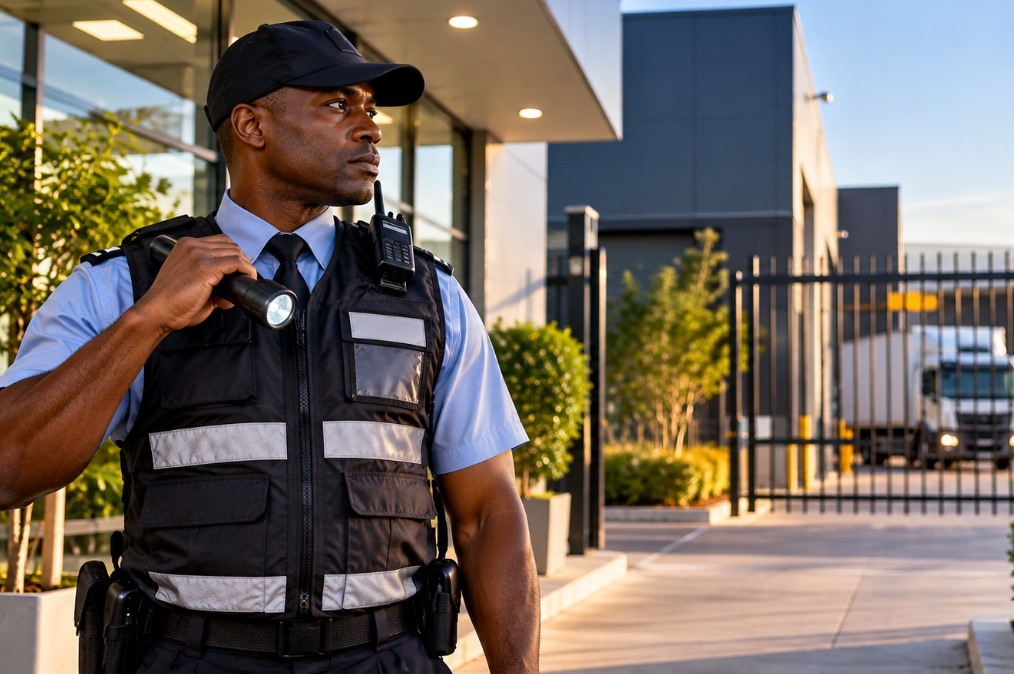
When it comes to business security, prevention is always better than dealing with the consequences of a security incident after it has happened.
A break-in, theft, vandalism or unauthorised access can cause much more than financial losses. It can disrupt business operations, affect employees, damage customer confidence and leave people feeling unsafe in a place where they should be able to work comfortably.
This is why visible security remains such an important part of protecting businesses across South Africa.
While modern technology such as CCTV, alarms and access control systems plays an increasingly valuable role, there is something particularly powerful about having a trained security professional physically present on a property. A visible security presence sends a clear message that the premises are being monitored and that suspicious activity is likely to be noticed.
Sometimes, simply knowing that someone is watching can be enough to make a potential offender think twice.
The deterrent effect of visible security
Criminal activity often involves an element of opportunity. If a property appears poorly protected, unattended or easy to access, it may become a more attractive target.
A clearly visible security officer can change that perception.
A security guard positioned at an entrance, conducting regular patrols or monitoring activity around a property makes it much harder for someone to assume that nobody is paying attention.
This does not mean that security guards can prevent every possible incident. No security measure can provide an absolute guarantee. However, a professional and visible presence can make a property appear less vulnerable and can discourage opportunistic criminal behaviour.
For businesses, this is one of the simplest yet most valuable benefits of professional guarding.
Prevention starts with being proactive
Effective security is not simply about waiting for something to happen and then responding.
A proactive security approach involves identifying potential vulnerabilities and addressing them before they become opportunities for crime.
Security officers are often in an excellent position to identify these vulnerabilities because they are physically present on the premises.
During routine patrols, for example, a guard might notice that a section of fencing has been damaged, that an entrance is not closing correctly or that lighting in a particular area is no longer working.
Each of these issues may seem relatively minor. However, together they can create opportunities for unauthorised access.
By identifying and reporting these concerns early, security personnel can help management address weaknesses before they become more serious problems.
Regular patrols create uncertainty for would-be criminals
Predictability can sometimes become a security weakness.
If someone knows exactly when an area is unattended or which parts of a property are rarely checked, they may attempt to take advantage of that knowledge.
Regular security patrols can make this more difficult.
A security officer moving through different areas of a property creates an element of unpredictability. They can inspect vulnerable areas, check doors and gates, observe activity and report anything unusual.
Patrols also demonstrate that security is active rather than simply a person standing at an entrance.
For larger commercial or industrial properties, this can be particularly important because there may be extensive areas that cannot be effectively protected by a single fixed security point.
People notice things technology may miss
CCTV cameras have become an essential part of modern security, and there is no question that they provide enormous value. They can monitor areas around the clock, record activity and provide important evidence when an incident occurs.
However, cameras do not replace human observation.
A security officer can notice changes in the environment, interact with employees and visitors, ask questions when something appears unusual and use professional judgement to determine whether a situation needs further attention.
For example, an unfamiliar vehicle parked near a restricted area may not automatically trigger an alarm. A security officer who knows the site and its normal activity may recognise that the vehicle is unusual and investigate according to established procedures.
This is where human awareness can complement technology.
A security presence can protect more than property
Crime prevention is not only about protecting buildings, equipment and stock.
Employees also need to feel safe.
A visible security presence at a workplace can provide reassurance to staff arriving early in the morning, leaving after normal working hours or moving around larger premises during the day.
Visitors and customers may also feel more comfortable when they see that a business has taken practical steps to protect its premises.
This can contribute to a stronger sense of professionalism and security across the organisation.
Good security starts with understanding the property
Every business has different vulnerabilities.
A warehouse may need particular attention around loading areas and storage facilities. An office building may require stronger access control and visitor management. A construction site may face risks associated with valuable equipment and materials. A residential or commercial complex may need regular patrols across multiple access points.
Professional security services should therefore begin with an understanding of the specific environment.
Where are the vulnerable areas? Who should have access? When is the property most active? Which areas are poorly lit? Are there entrances that require additional monitoring? What procedures should be followed if suspicious activity is identified?
Answering these questions allows security teams to work proactively rather than simply reacting to incidents.
Prevention also depends on communication
Security guards are an important part of the security picture, but they cannot operate in isolation.
Communication between security personnel, supervisors, management and employees is essential.
When guards are encouraged to report concerns and management responds appropriately, small issues can be dealt with before they become significant vulnerabilities.
For example, if security officers repeatedly report problems with a particular entrance, that information can help management decide whether repairs, improved lighting, additional access controls or other measures are necessary.
Security therefore becomes an ongoing process of observation, communication and improvement.
Creating a culture of security
One of the most effective ways businesses can reduce vulnerabilities is by creating a workplace where security is everyone's responsibility.
Employees should understand basic procedures such as not allowing unauthorised people to follow them through controlled entrances, reporting suspicious activity and keeping access credentials secure.
Professional security officers can support this culture by consistently applying site procedures and reminding people of the importance of following them.
When visible guarding, technology, employee awareness and effective procedures work together, a business can create multiple layers of protection.
Making security visible and proactive
Visible security is not about creating fear. It is about creating awareness.
A professional security officer sends a simple but powerful message: this property is monitored, security matters here, and unusual activity is likely to be noticed.
For South African businesses, where protecting people, property and business continuity is a serious consideration, that message can be extremely valuable.
CCTV and alarms can alert businesses to potential problems. Access control can help regulate who enters. Technology can provide valuable information. But professional security guards add something technology cannot provide on its own: a trained human being who is physically present, observant and ready to respond.
The goal of effective security should always be to prevent problems wherever possible, rather than simply dealing with them afterwards.
Because when security works well, sometimes the most important incident is the one that never happens.
As shared on LinkedIn
🛡️ How Visible Security Can Help Prevent Crime Before It Happens
The best security incident is the one that never happens!
A visible security presence does more than protect your premises. It can deter opportunistic crime, identify potential risks early and provide peace of mind for employees, customers and visitors.
From regular patrols and access control to proactive monitoring and reporting, professional security officers play a vital role in keeping businesses safe.
At Bolwa Security Services, we believe effective security starts with prevention, not just response.
🔎 Discover how visible security can help protect your people, property and business operations in our latest blog.
Protect your business with professional security solutions.
#BolwaSecurityServices #VisibleSecurity #CrimePrevention #SecurityGuarding #BusinessSecurity #ProactiveSecurity #SecuritySolutions #SouthAfrica